FATCA Compliance Meets Cybersecurity: What Changed in 2026
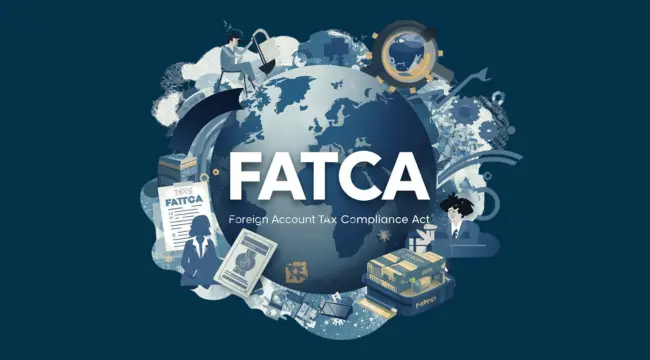
The convergence of FATCA compliance and cybersecurity protocols has reached a critical inflection point in 2026. As the Internal Revenue Service intensifies its oversight mechanisms and foreign jurisdictions implement stricter data protection frameworks, Foreign Financial Institutions (FFIs) face an unprecedented dual challenge: maintaining accurate tax reporting while safeguarding sensitive taxpayer information against evolving cyber threats.
The New Security Landscape for FATCA Reporting
The year 2026 marks a pivotal shift in how financial institutions approach FATCA compliance. The IRS has implemented enhanced authentication requirements for the FATCA Registration System, mandating that all users sign in using either Login.gov or ID.me credentials. This update introduces a higher level of security that complies with National Institute of Standards and Technology (NIST) digital identity guidelines, fundamentally changing how institutions access and manage their compliance accounts.
Responsible Officer certifications for the certification period ending December 31, 2025, are now due by July 1, 2026. Entities that fail to submit certifications by this deadline risk revocation of their FATCA status and removal of their Global Intermediary Identification Number (GIIN) from the Foreign Financial Institution list. The consequences of non-compliance extend beyond administrative penalties, potentially exposing institutions to a 30% withholding tax on certain U.S.-source payments.
Critical XML Schema Updates and Data Integrity
Effective January 1, 2027, all FATCA returns in XML format must be submitted using FATCA XML Schema Version 2.0.1. This update, announced by multiple jurisdictions including Singapore and Jersey, aligns FATCA reporting with the latest ISO Country and Currency Code lists. Financial institutions must ensure their reporting systems are updated to accommodate these schema changes, as the new version replaces the prior v2.0 standard that has been in use since October 2025.
The schema update carries significant implications for data integrity and cybersecurity. Institutions must validate that their data transmission protocols meet the enhanced encryption standards required for international financial data exchange. The Inland Revenue Department of Hong Kong has already released a new version of its Encryption Tool, requiring Reporting Financial Institutions to use this updated version for file encryption and transmission.
Cybersecurity Imperatives for Cross-Border Data Exchange
The intersection of FATCA and cybersecurity is further complicated by the Common Reporting Standard (CRS) and the automatic exchange of information across more than 110 jurisdictions. With over 134 million accounts and nearly 12 trillion euros in assets now covered under CRS, the attack surface for cybercriminals has expanded exponentially. Financial institutions must implement robust security frameworks that protect data throughout the entire reporting lifecycle, from initial collection to final transmission to tax authorities.
Key cybersecurity measures now essential for FATCA compliance include:
- Multi-factor authentication for all systems handling taxpayer identification numbers (TINs) and account holder data
- End-to-end encryption for data transmission using updated protocols aligned with NIST cybersecurity frameworks
- Regular security assessments to identify vulnerabilities in FATCA data collection and reporting workflows
- Incident response protocols specifically designed for breaches involving U.S. taxpayer information
- Third-party vendor management ensuring that all service providers meet IRS data security standards
Extended Relief Measures and Compliance Deadlines
The IRS has extended certain FATCA compliance relief provisions for Foreign Financial Institutions through 2027, providing additional time for institutions to implement required systems and reporting processes. This relief applies to withholding agents that fail to withhold and report by March 15 of the subsequent year on dividend equivalent payments made with respect to derivatives referencing partnerships, provided they complete reporting by September 15.
However, this relief should not be interpreted as a relaxation of cybersecurity standards. On the contrary, the IRS continues to enhance its use of artificial intelligence and advanced data analytics to identify non-compliance. The agency's systems now automatically risk-score returns and cross-reference taxpayer filings with foreign bank data received through FATCA, making missing informational forms easier to detect than ever before.
Jurisdictional Variations and Reporting Deadlines
FATCA and CRS reporting deadlines vary significantly by jurisdiction, requiring institutions to maintain sophisticated compliance calendars. Key 2026 deadlines include:
| Jurisdiction | FATCA Deadline | CRS Deadline | Registration Deadline |
|---|---|---|---|
| Singapore | May 31, 2026 | May 31, 2026 | March 31, 2026 |
| Cayman Islands | July 31, 2026 | July 31, 2026 | April 30, 2026 |
| British Virgin Islands | May 31, 2026 | May 31, 2026 | April 30, 2026 |
| Hong Kong | March 31, 2026 | May 31, 2026 | N/A |
Institutions operating across multiple jurisdictions must ensure their cybersecurity protocols satisfy the most stringent local requirements while maintaining compatibility with IRS standards. The Guernsey Revenue Service has issued specific bulletins reminding institutions that penalties may apply for late or non-compliant submissions, reinforcing the importance of both timely filing and data security.
The Operational Discipline of Modern Compliance
FATCA and CRS compliance has evolved from an annual filing exercise into a continuous operating discipline. Classification and due diligence now function as ongoing lifecycle processes rather than discrete onboarding steps. Regulators assess compliance based on whether initial determinations remain precise over time and are supported by current evidence.
Changes that trigger mandatory re-evaluation under FATCA include:
- Tax residency modifications
- Updates to controlling persons
- Entity structure changes
- Account usage variations
Where these triggers are not systematically recorded and routed through remediation workflows, classification drift occurs. This drift may remain undetected until reporting validation, manifesting as misclassified accounts, incomplete datasets, or reporting exceptions that expose institutions to both compliance failures and potential data breaches.
Preparing for the Future: Digital Assets and Emerging Threats
The IRS is actively evaluating how digital assets held abroad may fit under FATCA rules in future updates. While not yet mandatory, institutions servicing clients with cryptocurrency investments should monitor these developments closely. The implementation of the Crypto-Asset Reporting Framework (CARF) by jurisdictions such as South Africa, effective March 1, 2026, signals a broader trend toward comprehensive digital asset reporting that will inevitably intersect with existing FATCA cybersecurity requirements.
Conclusion: A Unified Approach to Compliance and Security
The 2026 changes to FATCA compliance represent a fundamental shift in how financial institutions must approach cross-border tax reporting. Cybersecurity is no longer a separate operational concern but an integral component of compliance architecture. Institutions that treat FATCA as an operating discipline, embedding compliance activities into routine processes while maintaining robust security protocols, will be best positioned to navigate the increasingly complex regulatory landscape.
For Foreign Financial Institutions, the message is clear: compliance and cybersecurity are now inseparable. Success in 2026 requires not only accurate reporting but also the demonstrable ability to protect the sensitive data that underpins every submission to tax authorities worldwide.
About V-Corp International
V-Corp International provides comprehensive compliance solutions for multinational enterprises navigating the complexities of international tax regulations. Our expertise spans FATCA, CRS, and emerging cybersecurity requirements, ensuring your institution remains compliant and secure in an evolving regulatory environment.
For more information on FATCA compliance and cybersecurity solutions, contact our team of specialists or visit our compliance resources center.
Related Articles: