The enterprise security landscape has reached an inflection point. The standalone firewall—once the cornerstone of network protection—is becoming obsolete. In its place, a new architectural paradigm is emerging: Secure Access Service Edge (SASE), and organizations are consolidating their security stacks at an unprecedented pace.
The Data Speaks: A Market in Transformation
According to Gartner's latest market analysis, the SASE market is experiencing explosive growth, with 39% of organizations globally planning full SASE implementation within the next 24 months . More significantly, 65% of these organizations prefer a single-vendor approach, recognizing that fragmented, multi-vendor security architectures create more vulnerabilities than they solve .
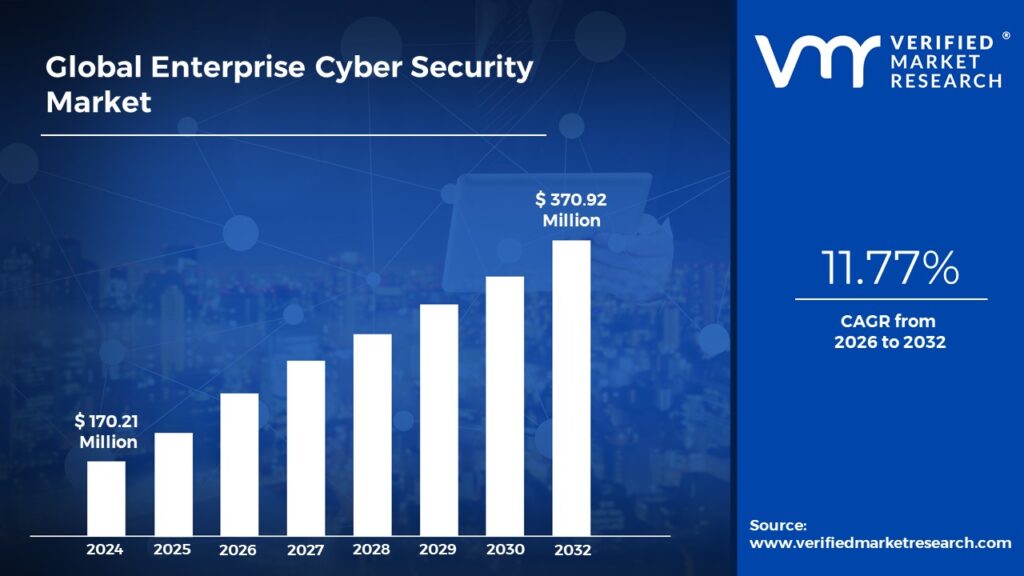 Figure 1: Enterprise Cyber Security Market growth from $170.21M (2024) to $370.92M (2032) with 11.77% CAGR [Source: Verified Market Research]
Fortinet has emerged as the dominant force in this consolidation, commanding 19.2% of the global security appliance market and achieving 22% growth in virtual firewall deployments [^4^]. Meanwhile, Palo Alto Networks' Prisma SASE platform has become the fastest-growing segment in their portfolio, with 36% year-over-year ARR growth and over 6,000 enterprise customers.
Why Standalone Firewalls Are Failing Modern Enterprises
The traditional firewall was architected for a perimeter-based security model that no longer exists. Today's enterprise reality includes:
-
Distributed workforces requiring secure access from anywhere
-
Multi-cloud environments extending beyond traditional network boundaries
-
Shadow IT proliferation creating invisible attack surfaces
-
Sophisticated ransomware that bypasses perimeter defenses entirely
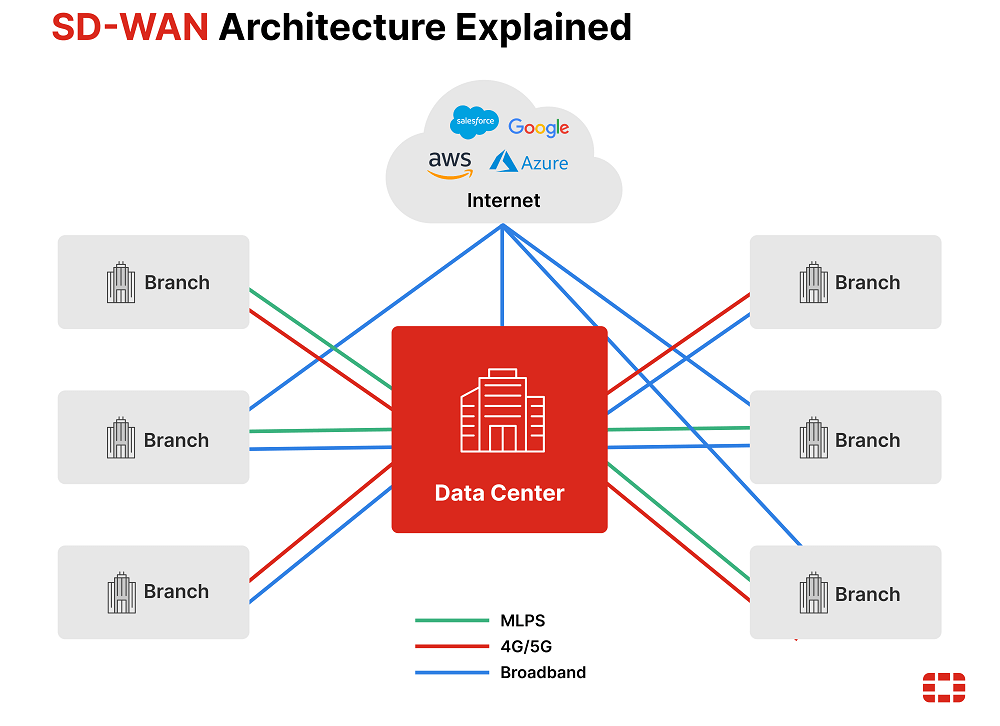 Figure 2: Zero Trust Architecture framework showing Policy Decision Point, Policy Engine, and enforcement across untrusted/trusted zones [Source: GeeksforGeeks]
Standalone firewalls cannot address these challenges because they were never designed to. They lack the integrated SD-WAN capabilities necessary for optimized cloud connectivity, the Zero Trust Network Access (ZTNA) frameworks required for identity-centric security, and the cloud-native scalability essential for modern infrastructure.
"The perimeter dissolved. Workforces became distributed. Applications migrated to cloud. And ransomware learned to bypass perimeter defenses entirely." — V-Corp International Security Analysis, 2025
The SASE Advantage: Fortinet's Converged Approach
Fortinet's Secure SD-WAN solution represents the evolution from firewall to fully integrated SASE platform. By converging networking and security functions—SD-WAN, next-generation firewall, advanced threat protection, and secure web gateway—into a single operating system (FortiOS), organizations achieve:
Total Cost of Ownership Reduction
Eliminating the complexity and licensing overhead of multiple point solutions.
Operational Simplicity
Unified policy management across all network edges through FortiManager.
Superior Security Posture
Native integration eliminates the security gaps inherent in stitched-together architectures.
Optimized Performance
Application-aware routing with integrated security inspection powered by Fortinet's proprietary SPU (ASIC) chips [^40^].
 Figure 3: Fortinet SD-WAN Architecture showing multi-branch connectivity via MPLS, 4G/5G, and Broadband to centralized Data Center and cloud services [Source: Fortinet]
For enterprises across the United States, Latin America, and the Caribbean, this consolidation translates to measurable business outcomes: reduced MPLS costs, accelerated cloud adoption, and security teams freed from the burden of managing disparate tools.
Palo Alto Networks: The Cloud-Native SASE Leader
While Fortinet dominates the appliance-converged market, Palo Alto Networks has established leadership in cloud-native SASE delivery. Prisma SASE combines Prisma Access (ZTNA and SSE) with Prisma SD-WAN, offering:
-
150+ global Points of Presence ensuring low-latency access worldwide
-
AI-powered threat prevention with real-time intelligence from 60,000+ customers
-
Zero Trust enforcement at every access point, regardless of user location or device
-
Seamless cloud integration with AWS, Azure, and Google Cloud Platform
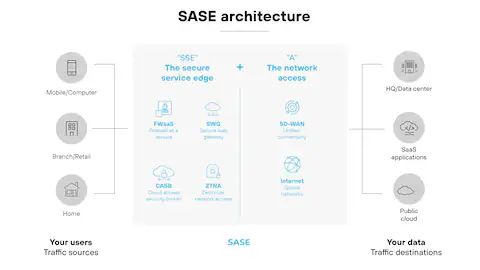 Figure 4: Palo Alto Prisma SASE Multi-tenant Zero Trust Cloud Fabric with global regions (US, EU, Asia, LATAM) and SP Network interconnection [Source: Palo Alto Networks]
This architecture is particularly compelling for organizations with significant cloud footprints and distributed global operations—characteristics increasingly common among enterprises in Mexico, Colombia, and Costa Rica.
Technical Comparison: Fortinet vs. Palo Alto SASE
Feature Fortinet Secure SD-WAN Palo Alto Prisma SASE
Architecture ASIC-accelerated hardware + cloud Cloud-native software stack
Best For Branch offices, high-throughput sites Cloud-first enterprises, hybrid workforces
SD-WAN Integration Native (built into FortiOS) Separate ION appliances + cloud
ZTNA Capability Included in FortiGate, no extra license Prisma Access add-on required
Pricing Model Aggressive CapEx, lower TCO Premium OpEx, modular licensing
Management Console FortiManager (unified) Multiple interfaces (complex)
*Source: Netify Vendor Comparison, Fortinet vs Palo Alto Analysis *
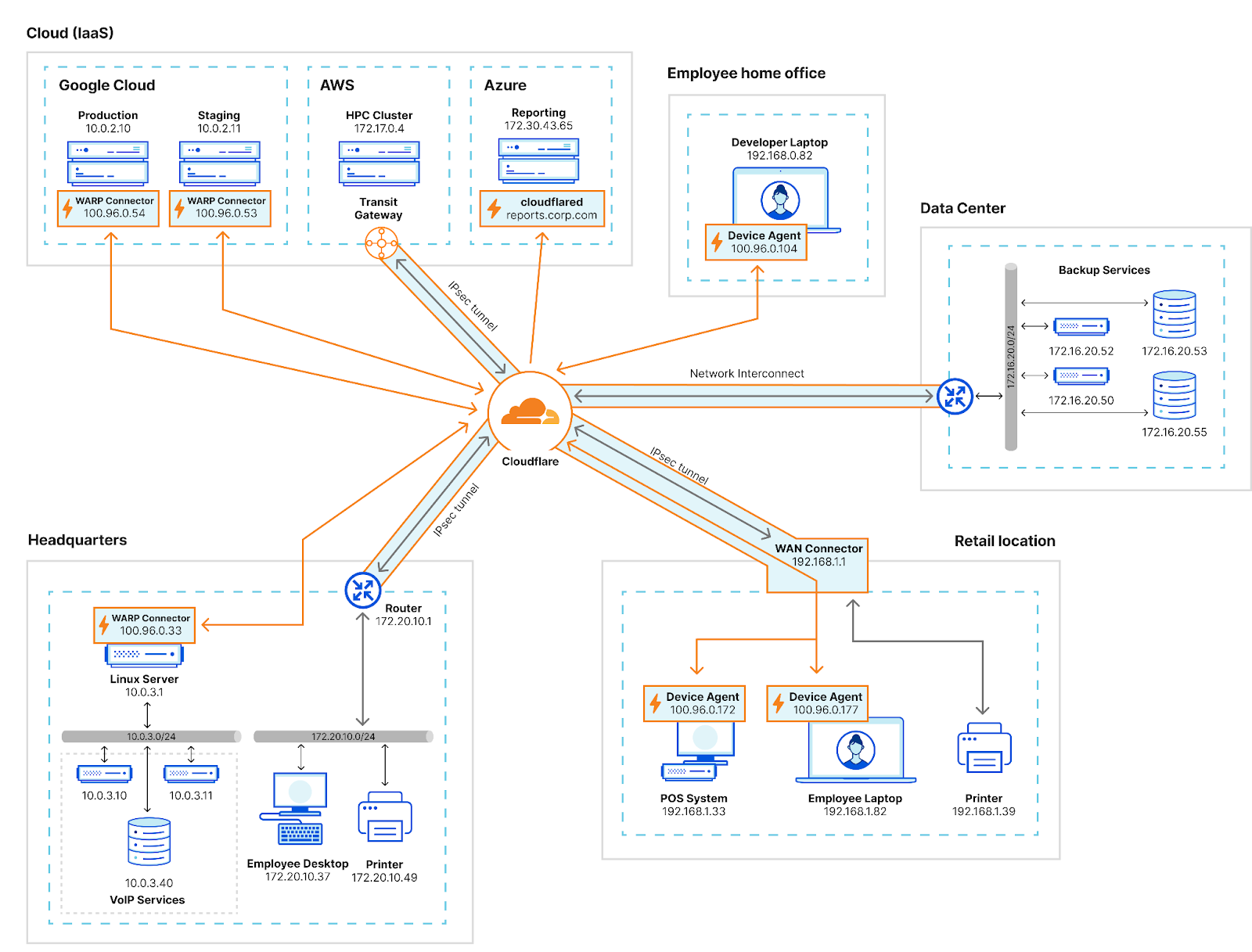 Figure 5: Single-vendor SASE architecture showing unified connectivity across Cloud (AWS, Azure, GCP), Home Office, Data Center, Headquarters, and Retail locations [Source: Cloudflare]
The Regional Imperative: Why LATAM and Caribbean Markets Are Adopting Rapidly
Latin American enterprises face unique pressures accelerating SASE adoption. Mexico concentrates 66% of the region's cyberattacks , creating urgent demand for consolidated, high-efficacy security. Financial institutions across Colombia and Panama require cyber-resilient architectures to maintain regulatory compliance and customer trust.
The Caribbean's multi-country operational models benefit particularly from SASE's centralized management capabilities, enabling consistent security policy enforcement across geographically dispersed locations from a single control plane.
The Strategic Choice for 2026
The transition from standalone firewalls to consolidated SASE platforms is not merely a technology upgrade—it is a strategic business decision. Organizations that delay this consolidation face:
-
Escalating security risks from fragmented architectures
-
Unsustainable operational complexity managing 10+ point solutions
-
Competitive disadvantage as peers achieve greater agility and lower security costs
The Single-Vendor SASE Checklist
Before consolidating, assess your readiness:
-
Current WAN architecture documentation
-
Cloud application inventory and traffic patterns
-
Identity provider integration requirements
-
Compliance mandates (data residency, encryption)
-
Total cost of ownership analysis (5-year projection)
The Consolidation Era Has Begun
V-Corp International partners with Fortinet and Palo Alto Networks to guide enterprises through this architectural transformation. Our expertise ensures that consolidation delivers not just simplified operations, but measurably improved security outcomes and optimized total cost of ownership.
The standalone firewall era is ending. The SASE consolidation era has begun.
Ready to Consolidate Your Security Stack?
Schedule a SASE Architecture Consultation with our certified engineers to assess your current environment and design your migration path.
Last updated: March 29, 2026 | Data sources: Gartner, Fortinet Q4 2024 Earnings, Palo Alto Networks Q4 2024 Earnings, V-Corp International Market Research