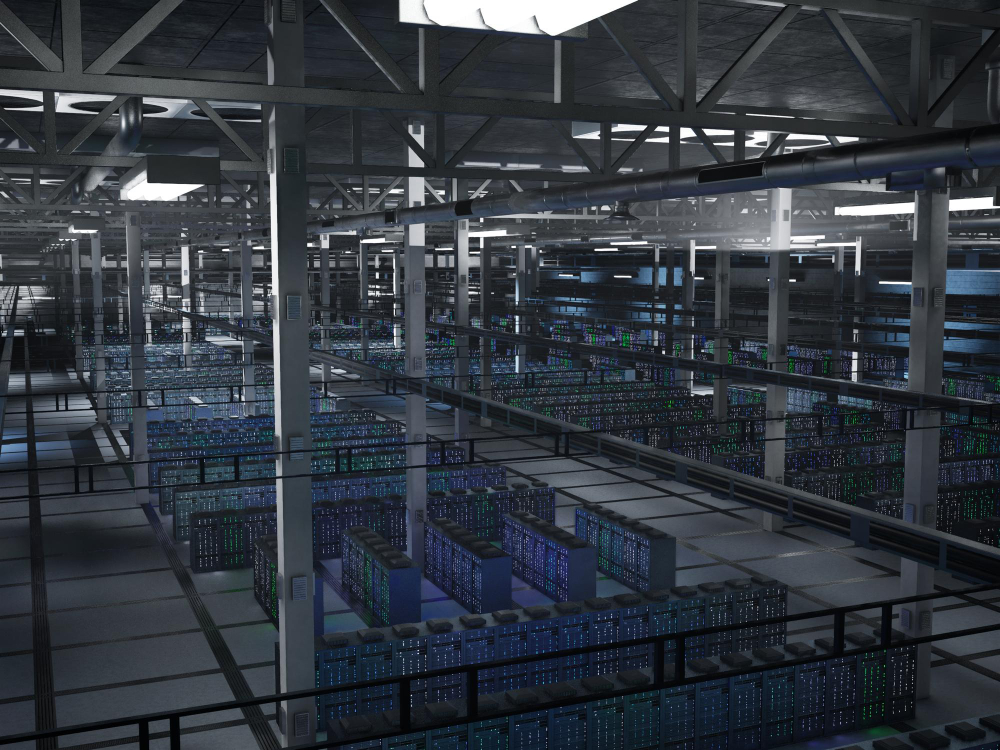
Demand for artificial intelligence infrastructure has reached unprecedented levels. According to Gartner, global data center spending will grow 10% in 2025, primarily driven by generative AI workloads. However, traditional Data Center providers face a critical dilemma: how to capture value from this technological wave without becoming trapped in the reduced margins of cloud service reselling or the multi-million dollar investments of proprietary platforms like NVIDIA DGX.
In this context, Quantea's QAI Cluster emerges as an AI infrastructure solution specifically designed to democratize access to training and inference clusters, enabling Data Center providers to offer high-value AI services with substantially superior margins.
TCO Comparison: Cloud vs. On-Premise vs. Hybrid
The dominant perception holds that implementing on-premise AI infrastructure requires prohibitive initial investments. Data, however, reveals a more nuanced reality for 8-GPU NVIDIA H100 configurations:
| Infrastructure Model | Initial Investment | Monthly Cost | 3-Year TCO | Savings vs. Cloud |
|---|---|---|---|---|
| AWS EC2 P5 (Cloud) | $0 | ~$84,000 USD | ~$3,024,000 USD | — |
| Google Cloud A3 (Cloud) | $0 | ~$47,579 USD | ~$1,712,844 USD | 43% |
| Quantea QAI Cluster (On-Prem) | ~$500,000 USD | ~$8,000 USD* | ~$788,000 USD | 74% |
| Hybrid (QAI + AWS Burst) | ~$500,000 USD | ~$20,000 USD | ~$1,220,000 USD | 60% |
*Includes power, maintenance, and operations.
This Total Cost of Ownership (TCO) comparison demonstrates that the economic inflection point —where on-premise investment surpasses cloud profitability— is typically reached between 9 and 15 months. For Data Centers, this translates into the ability to offer competitive pricing while maintaining margins above 40% over infrastructure cost.
Competitive Differentiation through Data Sovereignty
In a market where data protection and digital sovereignty have evolved from optional differentiators to regulatory requirements, QAI Cluster offers a structural advantage: processing of sensitive data without transit through third-party infrastructures.
| Security Capability | Public Cloud | QAI Cluster On-Prem |
|---|---|---|
| Physical data control | ❌ Third-party | ✅ Owned |
| GDPR/HIPAA/ITAR compliance | ⚠️ Shared | ✅ Internally audited |
| Data egress prevention | ❌ Variable costs | ✅ Eliminated |
| Integrated intrusion detection | ❌ Paid add-on | ✅ Included |
| Workload isolation (non-multi-tenant) | ❌ Shared | ✅ Dedicated |
This security matrix proves particularly valuable for regulated sectors including financial services, HIPAA-bound healthcare, and defense —verticals that have traditionally paid substantial premiums for privacy guarantees.
Modular Scalability: From Proof of Concept to Mass Production
The QAI Cluster architecture distinguishes itself through granular design enabling Data Center providers to grow organically according to market demand:
| Configuration | GPUs | Total VRAM | Ideal Use Case | Reference Pricing |
|---|---|---|---|---|
| QAI Mini | 4x H100 | 320 GB | Medium LLM fine-tuning, batch inference | From $350,000 USD |
| QAI Pro | 8x H100 | 640 GB | Foundation model training, real-time inference | From $500,000 USD |
| QAI Enterprise | 32x H100 | 2.56 TB | Large-scale training clusters, enterprise MLOps | From $2,550,000 USD |
| QAI Hyperscale | 128x H100+ | 10+ TB | AI research labs, scientific computing, 500B+ parameter LLMs | Custom |
The inclusion of integrated performance monitoring and Intrusion Detection Systems (IDS) further reduces operational costs associated with critical infrastructure management, eliminating the need for third-party licensing.
Network Architecture Comparison: Operational Efficiency
A key technical differentiator of QAI Cluster lies in its consolidated network architecture, reducing complexity and operational costs:
| Network Aspect | Traditional Cloud Infrastructure | Quantea QAI Cluster |
|---|---|---|
| Inter-node latency | 10-30 μs (virtualized RoCE) | 1-3 μs (RoCEv2 with QoS) |
| Network topology | Oversubscribed, shared | Non-blocking, dedicated |
| Resource contention | Risk of "noisy neighbors" | 100% dedicated resources |
| Kernel customization | Limited | Full stack control |
| AI-optimized I/O tuning | Generic | Optimized NVMe/Lustre/BeeGFS |
| Deep network telemetry | Standard tools | Integrated 400Gbps packet analysis |
This architectural efficiency translates directly into improved GPU utilization —frequently the most expensive bottleneck in AI workloads— and reduced requirements for specialized networking operations personnel.
AI Ecosystem: Technological Freedom vs. Vendor Lock-in
Unlike proprietary solutions that condition adoption to specific software ecosystems, QAI Cluster maintains native compatibility with the standard AI stack:
| Stack Component | NVIDIA DGX | Quantea QAI Cluster |
|---|---|---|
| ML frameworks | CUDA, TensorFlow, PyTorch | ✅ CUDA, TensorFlow, PyTorch, JAX |
| Container orchestration | Kubernetes (pre-configured) | ✅ Kubernetes, SLURM, customizable |
| Inference optimization | TensorRT exclusive | ✅ TensorRT, ONNX Runtime, Triton |
| Performance monitoring | Basic DCGM | ✅ Quantea QI (400Gbps packet capture) |
| Operating system | Forced Ubuntu | ✅ Ubuntu LTS, CentOS, RHEL |
| Software licensing | Mandatory NVIDIA AI Enterprise | ✅ No mandatory licenses |
This architectural openness enables Data Centers to serve a diversified customer base —from ML startups to government institutions— without technological compromises that limit future commercial flexibility.
AI as a Value-Added Service
For Data Center providers, Quantea's QAI Cluster represents more than technical infrastructure: it constitutes a business enablement platform that allows capturing value in the AI value chain without assuming the investment risks of model developers or the dependency of cloud platforms.
| Business Metric | Impact with QAI Cluster |
|---|---|
| Gross margin on AI services | +25-40% vs. cloud resale |
| Time-to-market for new services | 4-6 weeks |
| Enterprise customer retention | Increased through data sovereignty |
| Competitive differentiation | High (few on-premise competitors) |
| Technology risk | Mitigated (open architecture) |
The convergence of demonstrable economic savings, regulatory differentiation, and technological flexibility positions this solution as a strategic instrument for transforming traditional data centers into next-generation AI infrastructure providers.
Is your organization evaluating expansion opportunities in AI services? At V-Corp International, we advise Data Center providers on the evaluation and implementation of AI infrastructures that maximize return on investment and competitive positioning.
Contact our solutions architecture team to explore how QAI Cluster can integrate into your service offering.